Choosing the Right Vietnam Entry Port: A Traveler's Border-Crossing Guide
Pick a practical Vietnam eVisa entry port based on your destination, transport route, and border-crossing risk.
Vietnam permits eVisa entry only at the air, land, and sea border gates listed by Vietnam Immigration and shown in the official eVisa application system. However, choosing the wrong port can lead to major travel headaches: remote land border crossings often lack transport, small ports may lack proper scanning facilities, and attempting to enter through a port not on the official list can result in denial of entry.
TL;DR: Always match your entry port in the application to your actual travel route. If flying, fly into Noi Bai (Hanoi) for the North, Tan Son Nhat (HCMC) for the South, or Da Nang for Central Vietnam. For land borders, Moc Bai is the best connection from Cambodia, Lao Bao from Laos, and Huu Nghi from China. Check the Vietnam eVisa entry-port verification guide and the official eVisa form for exact official spelling.
Route type
Practical choices
Best for
Check before submission
Air
Noi Bai, Tan Son Nhat, Da Nang
Most international travelers
IATA code and official dropdown name match your flight
Land from Cambodia
Moc Bai or Ha Tien
Phnom Penh-HCMC buses or onward travel to Phu Quoc
Transport availability on both sides of the border
Land from Laos
Lao Bao or Cau Treo
Routes toward Hue, Da Nang, Vinh, or Hanoi
Distance, road conditions, and bus operation
Land from China
Huu Nghi or Lao Cai Railway Station
Nanning-Hanoi road routes or Yunnan-Hanoi rail routes
Whether your crossing is by road or rail
Sea
Chan May, HCMC/Hon Gai, Duong Dong
Cruise or coastal ferry arrivals
Cruise or ferry terminal matches the application
1. Arriving by Air: Selecting the Right Airport
The vast majority of international tourists arrive in Vietnam by flight. Among the official airport options, the three primary hubs handle most international passenger volume:
Noi Bai International Airport (Hanoi - HAN): The best entry gate for exploring northern Vietnam, including Hanoi, Halong Bay, Sapa, and Ninh Binh. Immigration queues are generally efficient, and the city center is a 40-minute taxi ride away.
Tan Son Nhat International Airport (Ho Chi Minh City - SGN): The primary hub for the south (HCMC, Mekong Delta, Mui Ne). It is the busiest airport in Vietnam; expect longer queues (45 to 90 minutes) during peak hours.
Da Nang International Airport (DAD): The perfect choice for travelers heading directly to Hoi An, Da Nang, or Hue in Central Vietnam. It offers a relaxed atmosphere and direct routes from several Asian hubs.
Other Regional Airports
If your itinerary is focused, check for direct flights to these regional airports:
Cam Ranh (CXR): Ideal for the coastal resort town of Nha Trang.
Phu Quoc (PQC): For direct flights to Phu Quoc Island.
Cat Bi (HPH): Located in Hai Phong, offering quicker land access to Halong Bay.
Rule of thumb: Always book your flight to the airport closest to your destination instead of automatically transit-booking via Hanoi or HCMC.
2. Crossing by Land: Border Crossings and Transport Logic
Vietnam shares land borders with Cambodia, Laos, and China. Among the official land-border options, only a few are practical for tourists due to transport connections:
Coming from Cambodia
Moc Bai (Tay Ninh Province): The standard overland route. Direct tourist buses run between Phnom Penh and Ho Chi Minh City (taking 5-7 hours), passing through Moc Bai. The checkpoint is highly structured, and border transport on both sides is abundant.
Ha Tien (Kien Giang Province): The southwestern crossing. It is the best choice if you are coming from Kep or Sihanoukville and plan to take a ferry to Phu Quoc Island immediately.
Caution: Other crossings like Xa Mat or Tinh Bien have very limited tourist infrastructure. Avoid them unless you have custom private transport.
Coming from Laos
Lao Bao (Quang Tri Province): The primary Laos-Vietnam crossing. Located along the Route 9 corridor, it connects Savannakhet in Laos to Hue and Da Nang. Daily sleeper buses run this route (approx. 10-12 hours).
Cau Treo (Ha Tinh Province): Convenient if you are traveling from Vientiane or Lak Sao toward Vinh or Hanoi.
Caution: Crossings like Bo Y or Tay Trang are extremely remote, with rough mountain roads and sparse transport options.
Coming from China
Huu Nghi (Lang Son Province): The primary land gate. It handles the majority of road travel between Nanning (China) and Hanoi, with well-organized passenger processing.
Lao Cai Railway Station: The scenic and comfortable option. You can cross the border directly via the international train linking Yunnan Province with Hanoi.
3. Arriving by Water: Seaports and Cruise Terminals
If you are arriving on an international cruise ship, you must select one of the major designated seaports:
Chan May Seaport: The purpose-built terminal serving cruise lines visiting Hue, Da Nang, and Hoi An.
Ho Chi Minh City Seaport & Hon Gai Seaport (Halong Bay): Both are fully equipped to process cruise passenger e-visas.
Duong Dong Seaport (Phu Quoc): The ferry gateway from Ha Tien. Ideal for coastal travelers.
4. How to Avoid Dropdown Errors in Your Application
When applying at evisa.gov.vn, the entry port is selected from a strict dropdown list. Mismatched spelling or selecting a minor checkpoint by mistake can lead to immigration issues at the border.
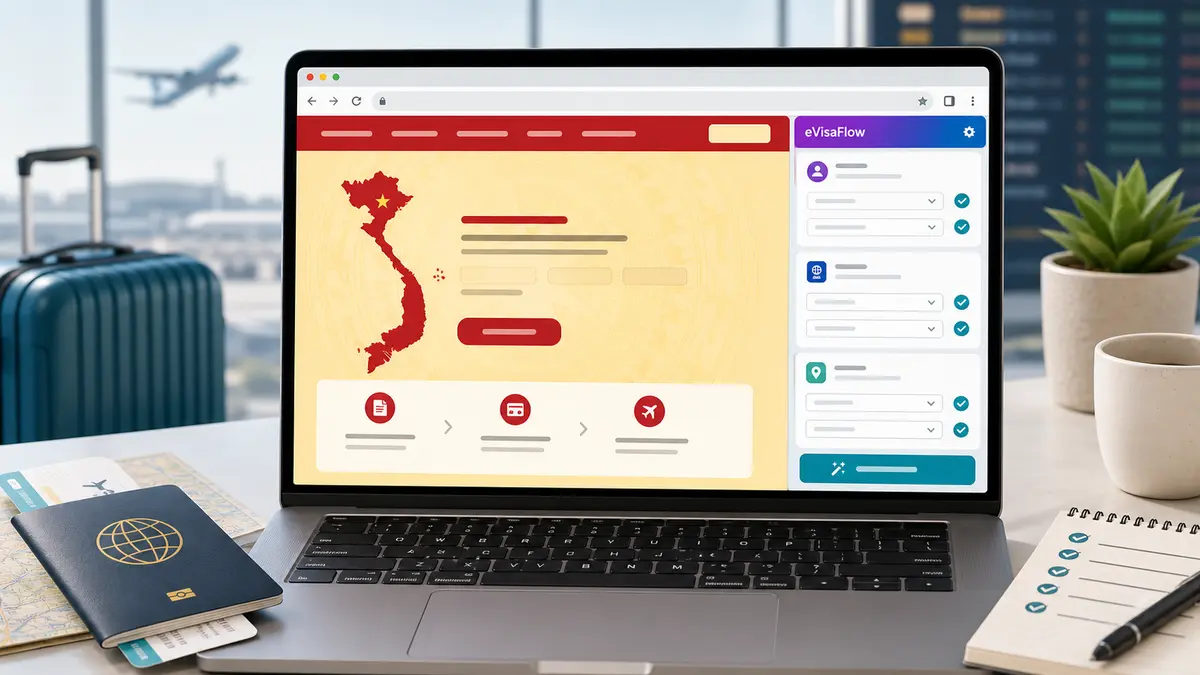
To reduce manual entry mistakes, the eVisaFlow Chrome extension can help enter your saved passport and trip information on the official Vietnam eVisa form. It does not decide the entry port for you, so confirm the port against your ticket before submitting.
Disclaimer:
The information in this article is compiled by evisaflow.com from official publications and open internet sources for informational purposes only, and does not constitute formal travel advice. Travel information (including but not limited to visa regulations, entry policies, fees, and attraction schedules) is subject to change without notice. Please verify all details independently with the relevant official authorities before traveling. evisaflow.com assumes no liability for travel disruptions or losses resulting from reliance on this content.
We use cookies
We use cookies for sign-in, preferences, and basic site analytics. By clicking "Accept", you consent to our use of cookies.
Learn more