Disclaimer: The information in this article is compiled by evisaflow.com from official publications and open internet sources for informational purposes only, and does not constitute formal travel advice. Travel information (including but not limited to visa regulations, entry policies, fees, and attraction schedules) is subject to change without notice. Please verify all details independently with the relevant official authorities before traveling. evisaflow.com assumes no liability for travel disruptions or losses resulting from reliance on this content.
Guide
Visa Application
Border & Entry
6 min read
Vietnam eVisa Official Website: Application Steps, Fees, and Common Mistakes
Use Vietnam's official eVisa website, understand the government fees and processing time, and prepare the current application details.
Vietnam's official electronic visa system lets eligible travelers apply, pay the government fee, check the application status, and obtain the eVisa online. A commercial service is separate from the government portal, so check the domain and distinguish any private service charge from the government fee.
TL;DR: Apply through the official government portal at evisa.gov.vn. The government fee is USD 25 for a single-entry eVisa and USD 50 for a multiple-entry eVisa. The official instruction states a processing time of 3 working days. Before paying, check whether your passport and trip qualify for a visa exemption, because exemption periods and conditions vary.
Direct Answer: Vietnam eVisa Rules and Fees
| Entry Method / Visa Type | Cost | Stay Limit / Term | Official Portal / Source |
|---|---|---|---|
| Visa Exemption (unilateral, bilateral, and Phu Quoc schemes) | No visa application fee | Varies by passport and exemption scheme | No eVisa application when eligible; check the official requirements |
| Single-Entry eVisa | USD 25 | One entry within the issued validity period, which may be up to 90 days | evisa.gov.vn |
| Multiple-Entry eVisa | USD 50 | Multiple entries within the issued validity period, which may be up to 90 days | evisa.gov.vn |
Step 1: Verify If You Need a Visa
Before opening the application form, confirm whether you are exempt. Vietnam has several exemption routes, so do not rely on a single country count or assume that every exemption has the same stay limit:
- 45-day exemption (Resolution No. 44/NQ-CP, March 15, 2025 to March 14, 2028): Germany, France, Italy, Spain, the United Kingdom, Russia, Japan, South Korea, Denmark, Sweden, Norway, and Finland.
- 45-day tourism-stimulus exemption (Resolution No. 229/NQ-CP, August 15, 2025 to August 14, 2028): citizens of Belgium, Bulgaria, Croatia, the Czech Republic, Hungary, Luxembourg, the Netherlands, Poland, Romania, Slovakia, Slovenia, and Switzerland traveling for tourism purposes, subject to the resolution's entry conditions.
- Other exemption arrangements: bilateral agreements, ASEAN arrangements, and other passport-specific rules have different stay limits and conditions.
- Phu Quoc exemption: the official tourism FAQ says foreigners and Vietnamese people holding foreign passports may stay on Phu Quoc Island without a visa for no more than 30 days. It also covers travelers who transit through an international air or sea entry point in Vietnam and then continue directly to Phu Quoc.
Exemption lists can change. For the per-country breakdown and current stay limits, see the Vietnam visa exemption guide, and verify your passport on the official visa requirements page before booking.
Step 2: Access the Correct Government Website
The official portal operated by Vietnam Immigration is https://evisa.gov.vn.
Vietnam Immigration's current eVisa system operates at evisa.gov.vn. Before entering passport information, verify that exact domain in the address bar. A commercial service is not the government application or status system.
Step 3: Choose the Right Visa Type
- Single-Entry (USD 25): one entry within the validity period shown on the issued eVisa, which may be up to 90 days.
- Multiple-Entry (USD 50): multiple entries within the same issued validity period, which may be up to 90 days. The fixed validity dates do not restart after each entry.
Important: The current form asks separately for the requested eVisa validity start and end dates and the intended date of entry. Use the requested validity dates deliberately, then plan travel within the dates shown on the issued eVisa. For worked examples, see the Vietnam eVisa stay duration guide.
Step 4: Fill the Form Carefully
Have your passport, a clear bio-page scan, and a compliant portrait photo ready before you start typing. For the full pre-submission checklist — document prep, photo specs, entry/exit port selection, and what to double-check before paying — see the Vietnam eVisa checklist before you apply.
The current application instructs applicants to enter the name as shown on the passport's ICAO line. Use the same surname and middle-and-given-name order shown there, and review every field against the physical passport before payment.
While filling the Vietnam eVisa official website form, eVisaFlow Southeast Asia can autofill saved passport, trip, accommodation, and contact information. Review every official field before submission.
Step 5: Pay and Wait for Processing
Pay online using a payment method accepted by the portal. The current application states that the application fee is not refunded if the eVisa application is denied.
The official instruction states that an application is processed in 3 working days.
The current portal says the application result will be sent to the submitted email. You can also use the official status search with the application number or registration code, application email, date of birth, and captcha. When approved, use the portal's "Get e-Visa" or download action and print the eVisa.
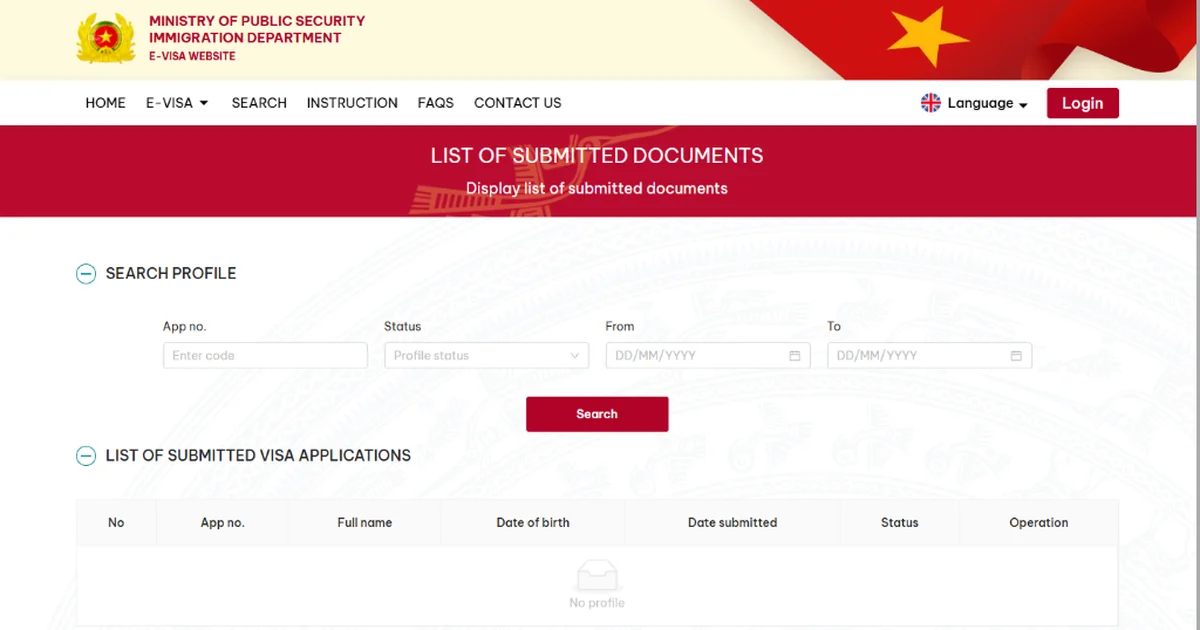
Step 6: Print Your eVisa and Check Entry Requirements
- Print the eVisa: The official instruction tells approved applicants to print the eVisa for entry and exit.
- Pre-Arrival Information (PAI): The Ministry of Public Security's May 2026 announcement described PAI as an optional pilot for foreign air passengers arriving at Tan Son Nhat International Airport, available within three days before entry and separate from visa processing. The announcement said expansion was planned, so check the current official PAI instructions for your arrival airport.
The eVisa is accepted only at officially listed air, land, and sea border gates. To help you choose the best entry point based on your route, check out our guide: Which Vietnam Entry Port Should You Use?.
References
For the details used in this guide, consult these official sources:
- Official Vietnam eVisa Portal: https://evisa.gov.vn
- Current Vietnam eVisa application form: https://evisa.gov.vn/e-visa/foreigners/
- Current Vietnam eVisa status search: https://evisa.gov.vn/e-visa/search
- Vietnam Tourism official eVisa application guide: https://vietnam.travel/plan-your-trip/official-vietnam-evisa-application
- Vietnam Immigration Pre-Arrival Information Announcement: https://en.bocongan.gov.vn/article/immigration-department-launches-pre-arrival-information-system-1778670404
- Vietnam visa requirements and exemptions: https://vietnam.travel/plan-your-trip/visa-requirements
- Vietnam Tourism visa FAQ, including Phu Quoc: https://vietnam.travel/faqs
- Vietnam 2025-2028 unilateral 45-day visa exemption notice (Resolution No. 44/NQ-CP): https://vietnam.travel/things-to-do/viet-nam-waives-visas-citizens-12-countries
- Vietnam 2025-2028 tourism-stimulus visa exemption notice (Resolution No. 229/NQ-CP): https://vietnam.travel/things-to-do/new-visa-exemption-policies-effective-15-august-2025
- Government-approved eVisa border-gate list and instructions: https://evisa.gov.vn/401
eVisaFlow tool
Filling official eVisa and arrival forms?
eVisaFlow helps you reuse passport details and reduce repetitive typing when you complete supported Southeast Asia eVisa and arrival forms.
Related Reading
Guide
Vietnam eVisa Checklist Before You Apply
Check your passport, photo, travel dates, entry ports, official portal, and payment details before submitting a Vietnam eVisa application.
Guide
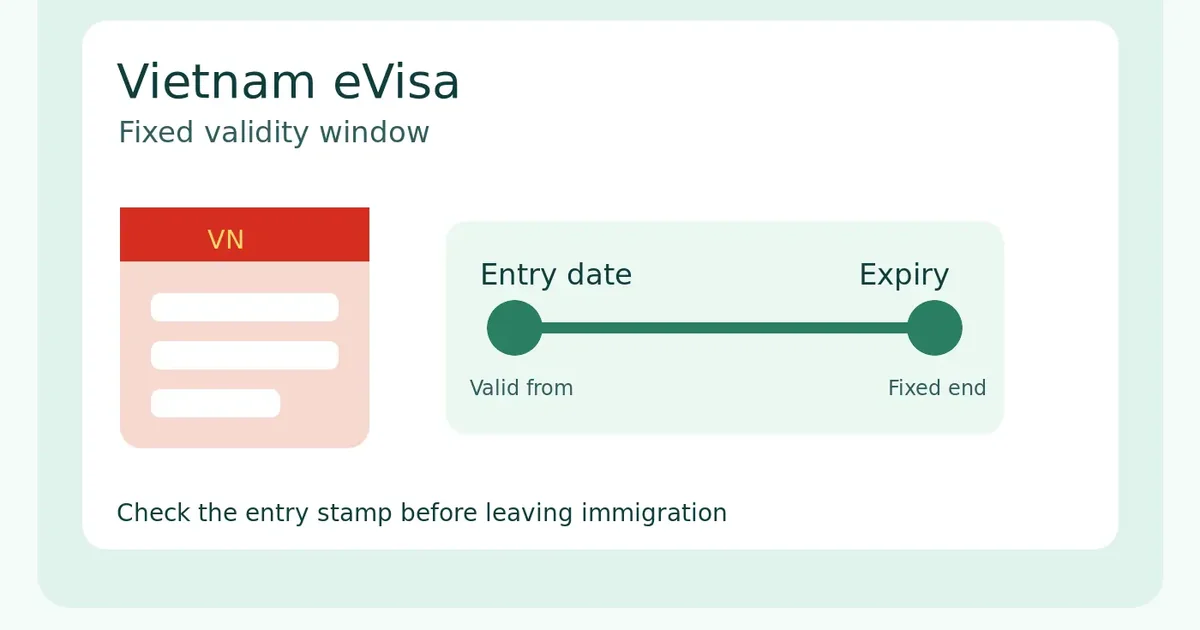
Vietnam eVisa Validity: Entry Date, Expiry Date, and How Long You Can Stay
Vietnam eVisas use a fixed validity window. Late entry does not extend expiry; check the earlier date on your visa or entry stamp.
Guide
How to Choose a Vietnam eVisa Entry Port for Your Actual Route
Choose among eligible Vietnam eVisa checkpoints by matching the official name to your flight, train, bus, cruise, or ferry booking.
Guide
Vietnam Visa Exemption Guide: 45-Day Stays, eVisa Options, and Phu Quoc Rules
Check Vietnam visa-free stays, eVisa options, official fees, and the Phu Quoc visa-free exception before travel.