Guide Visa Policy Border & Entry Travel Tips 4 min read
Back

Southeast Asia Visa Run Guide: Land Borders, Entry Limits, Safer Options

Understand visa-run risks at Thailand, Vietnam, Cambodia, and Laos land borders before planning repeated short stays.

Southeast Asia Visa Run Guide: Land Borders, Entry Limits, Safer Options

Visa runs look simple on travel forums: leave the country, cross a land border, come back, and reset your stay. In practice, repeated border runs can trigger document checks, entry-limit rules, or questions about whether you are using tourist status for long-term residence.

TL;DR: Do not plan a visa run only from old forum posts. Thailand's Tourist Visa Exemption Scheme permits only two land or sea entries per calendar year, except for nationals of Malaysia, Brunei Darussalam, Indonesia, and Singapore. A traveler outside those exceptions cannot rely on the scheme for a third land or sea entry that year. Repeated short exits and re-entries may also prompt questions about the traveler's purpose and documents. If you need a long stay, check the proper visa route before relying on border runs.


Direct Answer: What to Check Before a Border Run

Question Why It Matters
Does your nationality qualify for visa-free entry? Rules differ by passport.
Is land entry treated differently from air entry? Thailand limits visa-exempt entries by land and sea.
Do you need an eVisa for the next country? Vietnam eVisa users must enter through listed ports.
Do you have proof of onward travel and funds? Border officers may request it.

If your route actually requires an eVisa, arrival card, or port-specific entry step, check the country guide before you travel: Thailand entry ports, Vietnam eVisa entry ports, Cambodia eVisa land borders, and Laos eVisa entry ports.


Thailand: Be Careful With Land-Border Exemptions

Thailand caps land and sea entries made under the Tourist Visa Exemption Scheme. Current Thai embassy guidance states that such entry is permitted only twice per calendar year. Nationals of Malaysia, Brunei Darussalam, Indonesia, and Singapore are exempt from this two-entry cap. For other nationalities, a third land or sea entry in the same calendar year is not permitted under the exemption scheme; it should not be described merely as an entry that receives extra scrutiny.

The practical advice is simple: if you are staying in Thailand repeatedly, verify current rules with Thai immigration, MFA, or a Thai embassy before planning another land run, and check Thailand's entry-port options for routes and e-Gate details rather than relying on the two-entry allowance.


Vietnam, Cambodia, and Laos: Ports Still Matter

Vietnam eVisa holders can only use approved air, land, and sea border gates shown by the official system — for land routes, that means specific gates such as Moc Bai or Ha Tien from Cambodia, Lao Bao or Cau Treo from Laos, and Huu Nghi or Lao Cai from China, not just any crossing that happens to be near your route. Choosing an unlisted port can cause boarding or border problems.

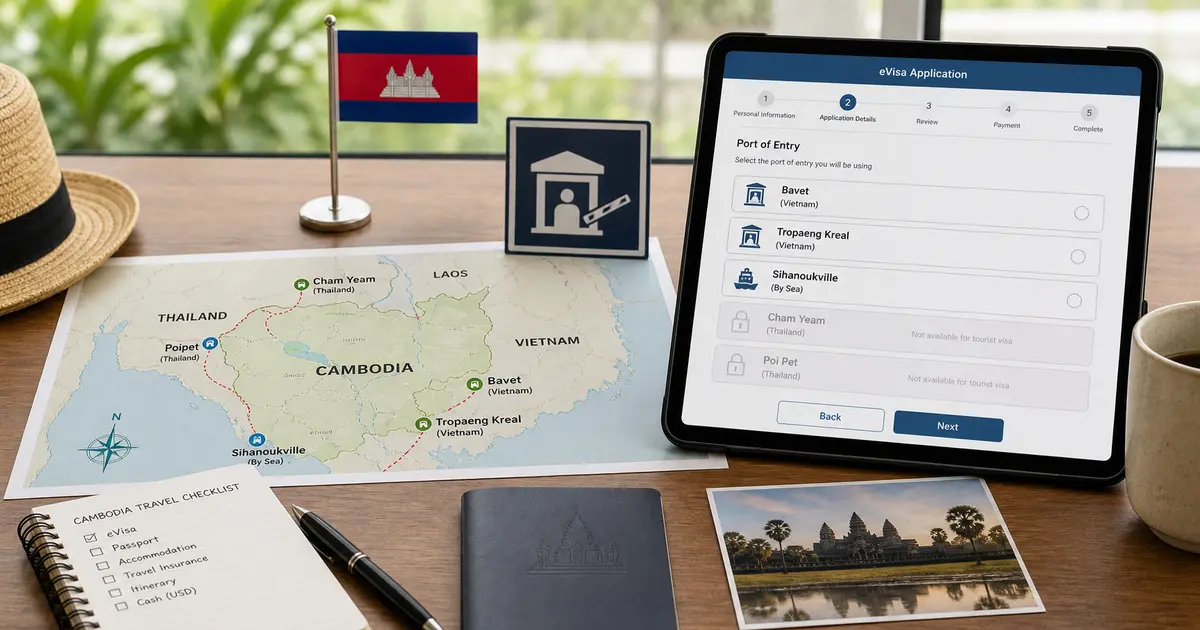
At the time this article was verified, Cambodia's official eVisa application accepted land entry at Bavet (from Vietnam) and Tropaeng Kreal (from Laos); the Thailand-Cambodia crossings at Cham Yeam and Poi Pet appeared in the form but were disabled and could not be selected. Check the live official application before booking because selectable ports and border operations can change. Laos eVisa is accepted at 9 designated ports, including three Lao-Thai Friendship Bridges, the Boten road checkpoint and railway station on the China border, and Khamsavath railway station near Vientiane — not every land crossing shown on a map or bus ticket is one of them.


Safer Alternatives to Repeated Visa Runs

If your goal is a longer stay, consider:

  • A tourist visa or long-stay visa before arrival.
  • Thailand's official eVisa route where eligible.
  • A proper business, education, retirement, or digital-nomad category if your activity qualifies.
  • Using an entry route that the official visa system currently supports instead of assuming a remote land crossing will accept your document. Flying does not itself guarantee admission.

A previous successful border run does not guarantee the next one. Immigration officers can still assess travel pattern, documents, funds, and onward plans.


References

Filling official eVisa and arrival forms?

eVisaFlow helps you reuse passport details and reduce repetitive typing when you complete supported Southeast Asia eVisa and arrival forms.

View the autofill tool

Related Reading

Disclaimer: The information in this article is compiled by evisaflow.com from official publications and open internet sources for informational purposes only, and does not constitute formal travel advice. Travel information (including but not limited to visa regulations, entry policies, fees, and attraction schedules) is subject to change without notice. Please verify all details independently with the relevant official authorities before traveling. evisaflow.com assumes no liability for travel disruptions or losses resulting from reliance on this content.

We use necessary cookies

We use first-party cookies for sign-in, security, checkout, and basic site functionality. We do not use third-party advertising cookies. Learn more