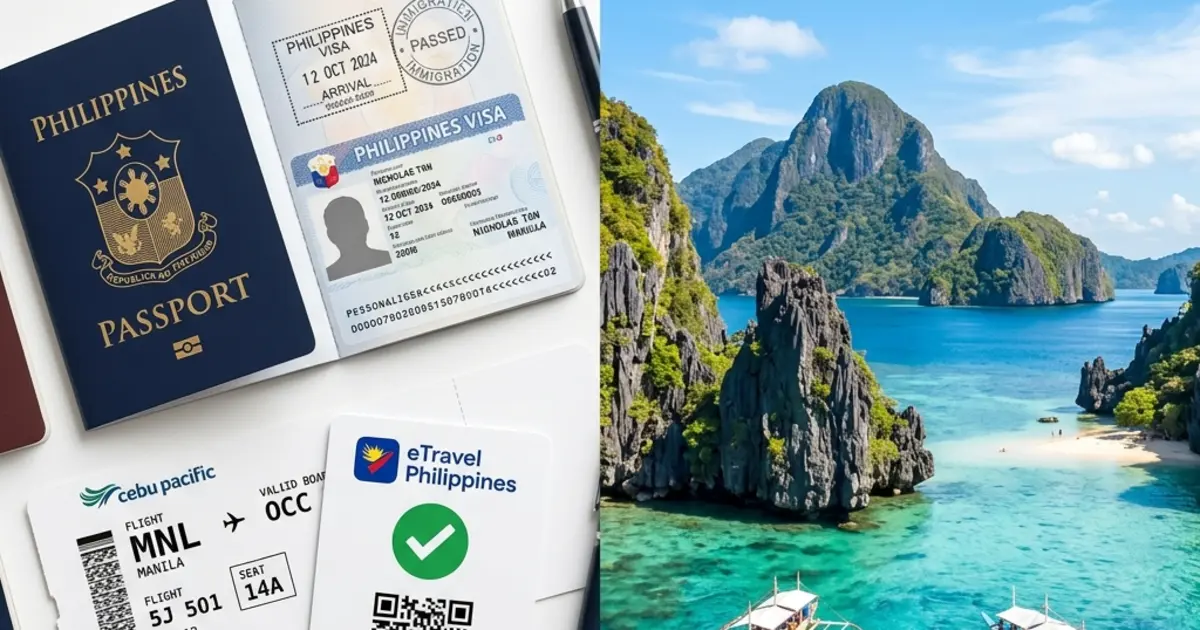
TL;DR: Nationals on the Philippines' Executive Order No. 408 list can generally enter visa-free for up to 30 days for tourism or business if they hold a return or onward ticket and a passport valid for at least six months beyond the contemplated stay. Separate rules give some passport holders different periods. Under Bureau of Immigration Operations Order No. 2026-001, eligible Chinese nationals may enter visa-free for up to 14 days through NAIA or MCIA, subject to the order's conditions. Most arriving passengers and crewmembers must also complete the free eTravel registration within 72 hours before arrival, although the official FAQ lists limited exemptions.
Direct Answer: Philippines Tourist Visa Types at a Glance
Entry Category
Who Qualifies
Cost
Stay Limit
Official Source
Visa-Free Entry
Nationals covered by the current visa-free rules who meet the entry conditions
Free
Usually 30 days under EO 408; separate rules apply to some passports, including the 14-day Chinese-national policy
The Philippines grants visa-free entry for tourism or business to nationals of many countries and territories. Common examples include:
ASEAN neighbors: Singapore, Malaysia, Thailand, Indonesia, Brunei, Vietnam, Cambodia, Laos, Myanmar
East Asia: Japan, South Korea
Western nations: United States, United Kingdom, Canada, Australia, and most EU member states
Under the standard EO 408 arrangement, eligible visitors receive an initial stay of up to 30 days. They must hold a return ticket to their country of origin or an onward ticket to their next destination, and a passport valid for at least six months beyond the contemplated stay. Some nationalities and passport categories have separate stay periods or conditions, so check the current official policy for the passport you will use.
China passport note: Bureau of Immigration Operations Order No. 2026-001 introduced a 14-day visa-free entry for eligible Chinese nationals for tourism or business. Travelers using this privilege may enter only through Ninoy Aquino International Airport (NAIA) or Mactan-Cebu International Airport (MCIA). They must have a passport valid for at least six months beyond the contemplated stay, confirmed hotel accommodation, a return or onward ticket, completed eTravel registration, and no derogatory BI record. The admission cannot be extended or converted to another Philippine visa category; Chinese nationals transiting through the Philippines to a third country still need a Philippine transit visa. The order took effect on January 16, 2026 and states that it remains valid for one year unless otherwise provided.
2. Philippine Tourist Visa and E-Visa
If your passport is not covered by visa-free entry, or if you do not meet a waiver's purpose or entry conditions, use the official Philippine visa channels. A longer stay does not always require a visa before travel: the Bureau of Immigration says a non-visa-required tourist initially admitted for 30 days may apply for an initial 29-day visa-waiver extension. This extension does not apply to the non-extendible 14-day Chinese-national privilege described above.
Option A: E-Visa / Online Application
The Department of Foreign Affairs operates the official E-Visa portal at evisa.gov.ph. Check the portal's citizenship tool and policy page before applying because eligibility, fees, and the processing post can depend on the applicant's nationality and location. The portal also states that an issued E-Visa does not guarantee admission and cannot be used to extend the authorized stay or convert to another visa type.
Option B: Philippine Embassy or Consulate Application
Applicants can also submit a traditional visa application through the nearest Philippine Embassy or Consulate-General. Check dfa.gov.ph or the specific consulate's official website for current requirements and appointment procedures.
3. Required Documents for a Philippine Tourist Visa
The official E-Visa policy page currently lists the following minimum requirements for a 9(a-2) tourism/leisure visitor. A Philippine embassy or consulate may apply post-specific instructions or request additional documents, so verify its final checklist before submitting:
Passport or travel document - valid for at least six months beyond the intended stay
Completed visa application - in the format required by the E-Visa portal or processing post
Entry and exit reservation - ticket or flight reservation for the planned trip
Proof of financial capacity - for example, six months of bank statements or tax payments, an employment certificate showing remuneration, proof of business income, or a sponsor's guarantee with evidence of funds
Ties to the home country or country of residence - such as an employment certificate or property documents
Travel itinerary - the planned places and activities
Accommodation - hotel booking or other proof of lodging; a host arrangement may require supporting documents
For a minor traveling without a parent or guardian - a permission letter and any additional documents required by the processing post
Specific document requirements may vary by consulate location and applicant profile. Always verify the current checklist on the official Philippine government website before submitting.
4. Mandatory eTravel Registration
Most travelers entering the Philippines must complete the eTravel digital registration at etravel.gov.ph. The official FAQ requires arriving Filipino and foreign passengers and crewmembers to register, but exempts foreign diplomats and their dependents, foreign dignitaries and delegation members, 9(e) visa holders, and holders of diplomatic or official/service passports.
When: Register within 72 hours before arrival and be ready to show proof of registration before boarding.
Cost: Free.
Output: Save or screenshot the QR code. The official FAQ says it must be shown to an airline representative before boarding; border authorities may also use it during processing.
The eTravel registration is free. Any website charging a fee to process or expedite your eTravel registration is not the official Philippine eTravel portal.
5. Common Mistakes to Avoid
Name spelling mismatch: The name in your eTravel registration, visa, and passport should match exactly.
Overstaying: Exceeding your authorized stay may lead to fines or future entry problems.
Third-party visa agencies: Apply through official channels whenever possible. Third-party agencies may charge markups and cannot guarantee approval.
Disclaimer:
The information in this article is compiled by evisaflow.com from official publications and open internet sources for informational purposes only, and does not constitute formal travel advice. Travel information (including but not limited to visa regulations, entry policies, fees, and attraction schedules) is subject to change without notice. Please verify all details independently with the relevant official authorities before traveling. evisaflow.com assumes no liability for travel disruptions or losses resulting from reliance on this content.