Indonesia e-VOA vs Visa on Arrival at the Airport: Which One Should You Use?
Indonesia e-VOA and airport visa on arrival compared on fee, payment, documents, entry points, extension and the arrival queue, so you can decide which to use.
Indonesia offers eligible short-stay visitors two routes to the same 30-day visa: the e-VOA, which the official portal evisa.imigrasi.go.id calls the Visitor Visa and which you pay for online before you fly, and the visa on arrival (Visa Kunjungan Saat Kedatangan), which you pay for at a bank counter inside the immigration checkpoint after landing. The fee, the stay and the extension rule are the same. What differs is when and how you pay, what you need to have with you, where each is accepted, and which queue you join at the airport.
Checked on November 8, 2026 against the official e-Visa portal and the Directorate General of Immigration's pages (imigrasi.go.id, Ngurah Rai Immigration Office). Figures and lists below are as published on that date; recheck before you travel.
TL;DR: Both routes cost IDR 500,000, give a single entry with a 30-day stay, and can be extended once for 30 more days. Choose e-VOA if you can pay with a Mastercard, Visa or JCB credit card with 3D Secure and can apply within the 14 days before travel (at least 48 hours before departure is advised); with an electronic passport, e-VOA holders can also use the autogates at Soekarno-Hatta and Ngurah Rai. Choose the airport visa on arrival if you cannot pay by card online, are leaving too soon to apply, or are entering at a checkpoint that issues visa on arrival. Neither guarantees entry; the officer at the checkpoint decides.
Quick Comparison
Question
e-VOA (Visitor Visa online)
Visa on arrival at the checkpoint
Where and when do you apply?
On evisa.imigrasi.go.id, up to 14 days before travel; at least 48 hours before departure is advised
At the immigration checkpoint after landing
Fee
IDR 500,000, plus any charge your card issuer adds
IDR 500,000, paid at the bank counter inside the checkpoint
How do you pay?
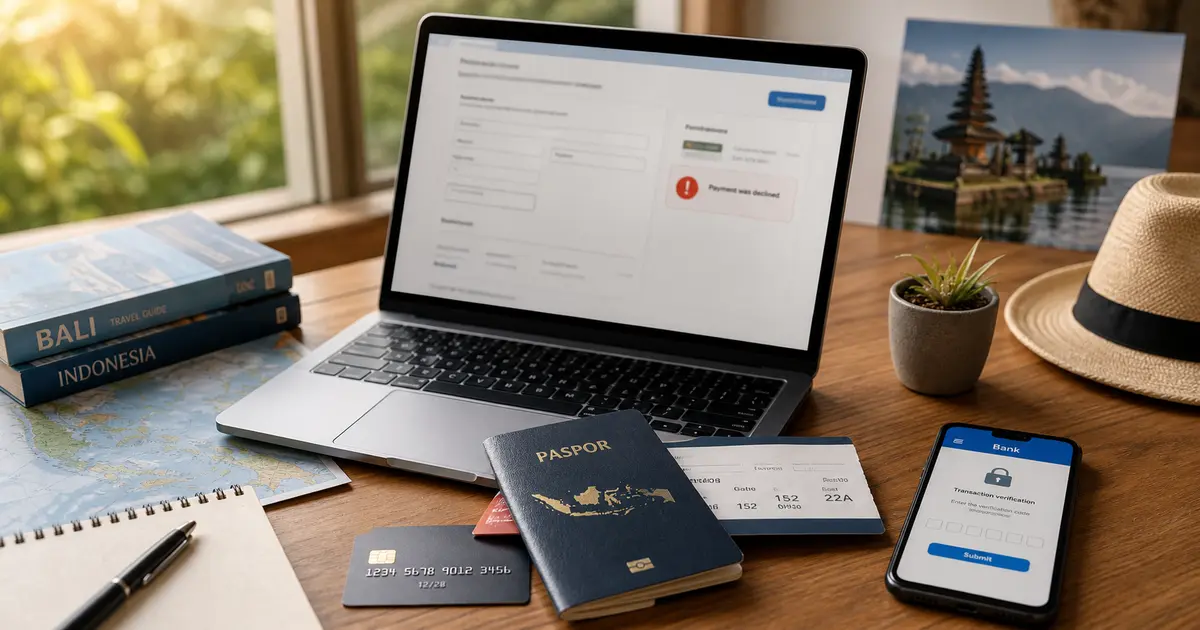
Mastercard, Visa or JCB credit card with 3D Secure and international transactions enabled; the card need not be in your name; pay within 120 minutes of the payment confirmation page
At the bank counter at the checkpoint; the official pages do not list which payment methods the counter takes, so bring a backup
What do you need?
A passport valid at least 6 months from arrival and an image of its biodata page (JPG/JPEG/PNG, max 200 KB), a passport-size photo, an email address, the card
Passport valid more than 6 months, return or onward ticket
Who is eligible?
Passports of the 87 countries and territories listed on the e-Visa information page
Passports of the 97 countries and territories on the Directorate General of Immigration's visa-on-arrival list; the two lists are not identical, so check yours on both
Where can you enter?
The e-Visa page lists 16 airports, about 100 seaports and 7 land border posts for Visitor Visa holders; the Directorate General's checkpoint list for e-VOA holders counts 122 (16 airports, 95 seaports, 11 land border posts)
Issued at the Directorate General's designated checkpoints, the same 122-entry list; the two official lists differ on land border posts, so check yours on both
Stay and extension
Single entry, 30 days from arrival, visa valid 90 days from the chosen date; extendable once for 30 days, total 60
Single entry, 30 days; extendable once for 30 days, total 60
Arrival queue
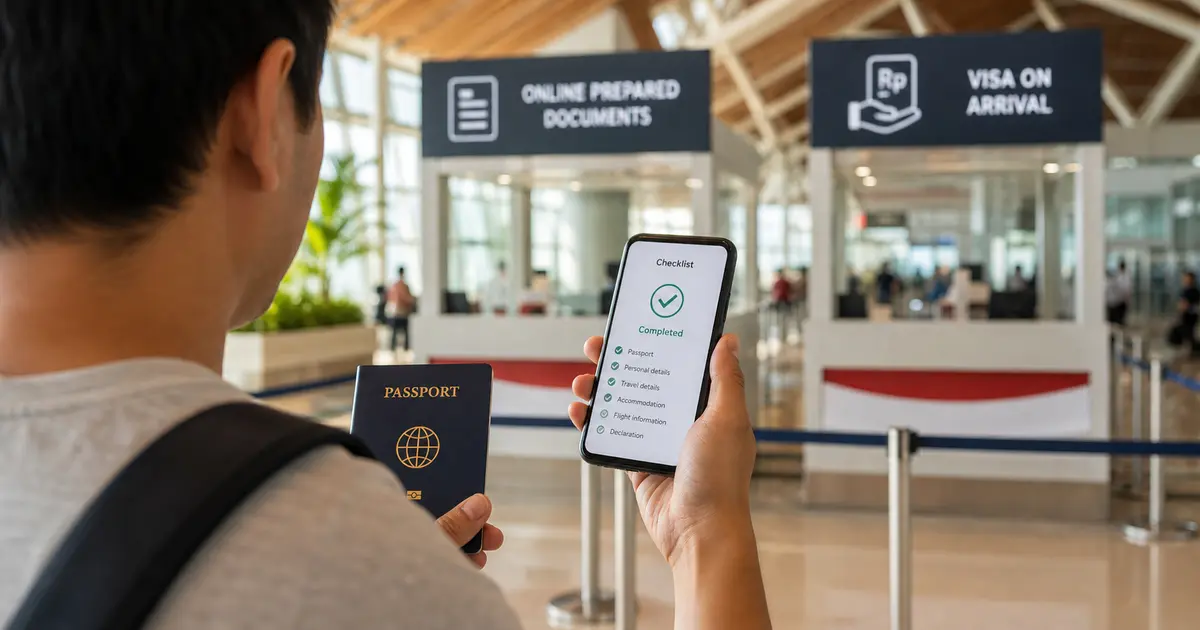
With an electronic passport, e-VOA holders can use the autogates at Soekarno-Hatta and Ngurah Rai; otherwise straight to the immigration counter, where officers verify the Visitor Visa in their system; no bank counter
Bank counter first, then the visa-on-arrival immigration counter
What can go wrong?
Card declined, payment timeout, typo that cannot be corrected after processing (no refund; apply again)
Queue time at busy arrivals, missing onward ticket, counter payment problems
What the Visa Itself Covers
The e-Visa portal describes the Visitor Visa as a single-entry visa for a 30-day stay for tourism, government visits, business meetings, goods purchasing or transit. It is valid for 90 days from the date you choose in the application, and you may enter on any day in that window; the 30-day stay counts from the day you arrive.
The Directorate General of Immigration describes the visa on arrival (index B) as the same 30-day stay permit issued at the checkpoint, extendable once for 30 days so that the total stay is at most 60 days. The fee for the 30-day stay permit is IDR 500,000 per application on both routes.
When e-VOA Is Worth It
You hold an electronic passport and arrive at Soekarno-Hatta or Ngurah Rai. The Directorate General of Immigration states that foreign nationals with an electronic passport who hold an e-VOA or e-Visa can use the autogates; since August 26, 2024 children aged six and over may use them too. Counter visa-on-arrival holders are not covered by that statement and go to the manual counter. e-VOA holders without an electronic passport, or arriving at another airport, go straight to the regular immigration counter; the fee is already paid, so there is no bank counter step.
Prerequisites: a Mastercard, Visa or JCB credit card with 3D Secure and international transactions enabled (it does not have to be yours), and an application made within the 14 days before travel, ideally at least 48 hours before departure.
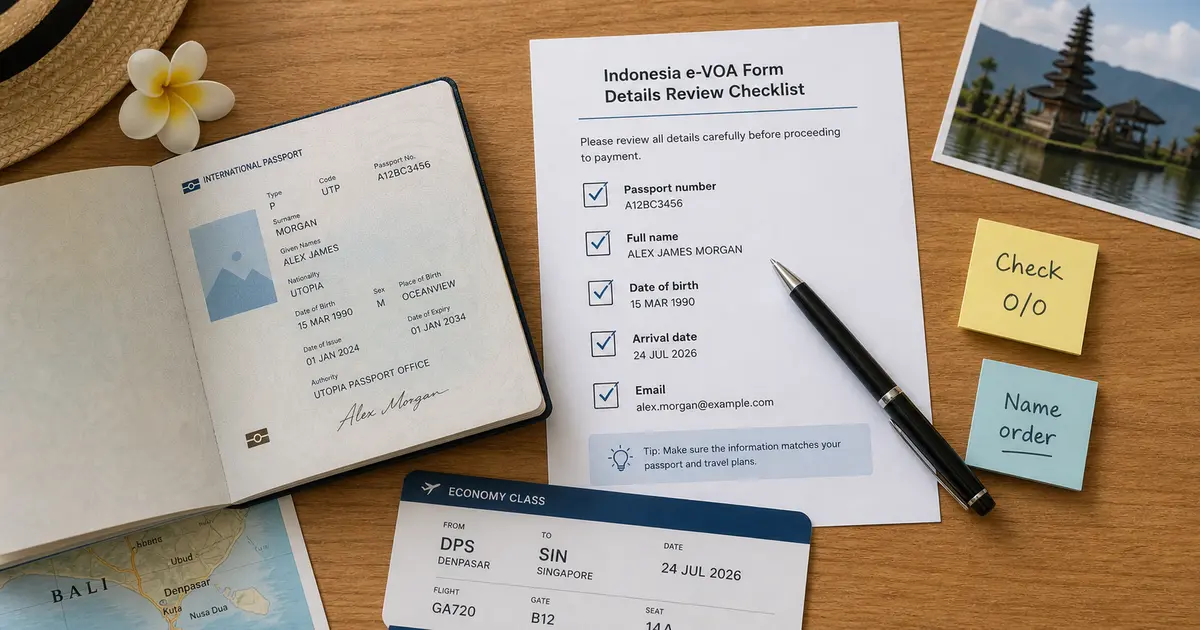
You are traveling as a family or group. Each traveler needs a separate Visitor Visa, including infants and children on a parent's passport, and once a visa is processed nothing on it can be changed. Doing this at home, with each passport open, is easier than doing it in the arrivals hall.
Your checkpoint is on the e-Visa entry list. The information page lists the airports, seaports and land posts where Visitor Visa holders may land. The FAQ still contains an older answer saying the Visitor Visa is available only at Soekarno-Hatta and Ngurah Rai; if you are landing elsewhere, confirm your port with the Visitor Visa Support Desk ([email protected] or [email protected]) before paying.
When Airport Visa on Arrival Fits
You have no eligible card, or your card fails 3D Secure. The counter route needs no online payment. The official pages say the fee is paid at the bank counter inside the checkpoint but do not publish which currencies or cards that counter accepts, so carry more than one way to pay.
You are leaving in less than 48 hours and would rather not risk an unfinished online payment. The portal warns that if a payment goes through but the application does not complete, no refund is granted, and that you should not pay again until the support desk advises you to.
Your passport or checkpoint is on one official list but not the other. The Directorate General's eligibility list has 97 entries and the e-Visa page's 87; the checkpoint lists differ on land border posts (11 against 7). If the e-Visa page does not list your passport or your entry point, ask the support desk or use the counter.
You accept the queue. At the checkpoint you pay at the bank counter, keep the receipt, then present your passport, your return or onward ticket and the receipt at the visa-on-arrival immigration counter.
Visa on arrival is not a way around eligibility: the e-Visa FAQ says citizens of the eligible countries can obtain it at the checkpoint and points to imigrasi.go.id for the requirements.
Extending Either Visa
Both the e-VOA and the counter visa on arrival are extended once, for 30 days, through the immigration office whose area covers the address where you are staying. The Directorate General of Immigration says the extension can be applied for from 14 days before the stay permit expires and must be applied for before it expires; if you pay the extension fee before expiry you are not counted as overstaying. The Ngurah Rai Immigration Office describes the current procedure as an online application on evisa.imigrasi.go.id, payment of IDR 500,000 per application within 3 days, then a visit to the office for a photo and interview. Overstaying costs IDR 1,000,000 per day and can lead to detention, deportation or a travel ban.
The e-Visa FAQ phrases this as "apply for a residence permit extension at the Immigration Office"; it is the same extension, not a different visa.
Disclaimer:
The information in this article is compiled by evisaflow.com from official publications and open internet sources for informational purposes only, and does not constitute formal travel advice. Travel information (including but not limited to visa regulations, entry policies, fees, and attraction schedules) is subject to change without notice. Please verify all details independently with the relevant official authorities before traveling. evisaflow.com assumes no liability for travel disruptions or losses resulting from reliance on this content.
We use cookies to understand how visitors use our site so we can improve it. You can accept or reject analytics cookies.
Learn more